основанная компания

служащий компании

годовой оборот компании (м)

страна сотрудничества


2025
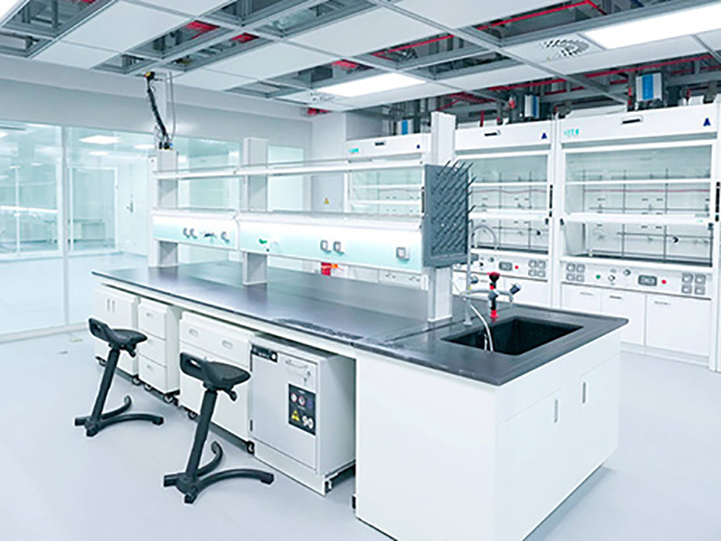
Let’s start by answering the question everyone asks first: “What exactly is USP 800?” In the cleanroom industry—especially pharmacy compounding and hospital pharmacy operations—it is both a safety rule and an engineering standard. As a cleanroom engineering and solution provider, Wonclean will break down the core concepts of usp 800 and the essential design requirements in a light yet rigorous way. What is USP 800? USP 800 is a standard specifically created to regulate the compounding, storage, and handling of Hazardous Drugs (HDs). Its primary goal is to protect healthcare workers, patients, and the environment. It works alongside USP 795 and USP 797, and in the U.S. healthcare system, it is considered a mandatory engineering and operational requirement. To make things clearer, USP 800 focuses on three major areas: Engineering controls (ventilation, cleanroom structure, exhaust, pressure control) Environmental controls (particle levels, temperature and humidity, ISO classification) Administrative controls (PPE, training, documentation) Key Requirements of USP 800 Engineering Control Essentials Below is a simplified version of the engineering requirements that Wonclean commonly uses when designing USP 800 facilities for hospitals and pharmacies: Area Pressure Air Changes (ACPH) Exhaust HD Storage Negative ≥12 ACPH External, no recirculation Non-Sterile HD Compounding Negative ≥12 ACPH External exhaust Sterile HD Buffer Room Negative, ISO 7 ≥30 ACPH Dedicated external exhaust Anteroom Positive, ISO 7 ≥30 ACPH Recirculation allowed The most critical point: All HD compounding must be done in externally exhausted equipment such as a pharmacy compounding hood (BSC or other externally vented C-PECs). What does USP 800 Compliance Require? USP 800 compliance is a system-level engineering effort—it is not “just buying a hood.” Wonclean typically plans a project with the following structure: Facility & Equipment Select Class II BSCs or isolators Equipment must be externally vented, never recirculated Position away from doors, vents, or airflow disturbances HVAC & Pressure Control Maintain -0.01 to -0.03 inH₂O in HD rooms 30 ACPH is required for ISO 7 sterile compounding rooms Exhaust points must be far from air intakes; buildings should reserve shaft space Administrative Controls USP 800 requires implementation of the following administrative measures: Annual training (HD handling, spill management, PPE donning/doffing) Continuous pressure monitoring and documentation Annual certification of containment devices (HEPA leak test, airflow testing) Updating HD inventory lists and performing risk assessments These administrative controls ensure engineering systems are properly used and remain stable. How to Design a USP 800 Space Based on years of cleanroom engineering experience, Wonclean usually follows a structured workflow during USP 800 projects: Needs Assessment This begins with detailed, checklist-style communication to determine: Compounding vol...
2025
When people begin planning a cleanroom, the first question that usually comes to mind is: “Where do I even start?” This is exactly why a well-structured cleanroom checklist is so valuable—it breaks a large, complex project into a clear and understandable roadmap. At Wonclean, after supporting many clients with cleanroom design and engineering, our conclusion is simple: the clearer the checklist, the smoother the project. Why is a Cleanroom Checklist so Important? Unlike ordinary rooms, cleanrooms come with a lot of rules—particle control, airflow organization, pressure gradients, filtration efficiency… all tightly interconnected like gears in a precision machine. A good checklist helps you grasp the entire framework before diving into detailed design. But the question is: What exactly should a checklist include? What makes it “complete”? Let’s break it down from the most fundamental elements. Defining Requirements (More Important Than Design Itself) Every successful cleanroom project begins with clear requirements. These include the cleanroom’s purpose, product characteristics, and applicable regulatory standards. Whether you’re following cleanroom standards like ISO 14644 or compliance frameworks such as GMP/FDA, the foundation must be set first. Key requirements include: Cleanliness class (ISO 5–8 or GMP A–D) Temperature & humidity range Pressure gradients Airflow patterns Personnel/material flow routes Environmental monitoring needs Cleaning & maintenance procedures This serves as the project’s steering wheel—without it, every decision becomes guesswork. Layout & Process Flow Planning A good layout leads to a good cleanroom; a poor layout can never be fixed later. Your checklist should verify: Separation of personnel and material entry Adequate size of gowning rooms & airlocks Process flow designed to prevent cross-contamination Proper location for utility rooms Compliance of emergency exits If people and materials move inefficiently, even the most powerful filtration system cannot save the cleanroom’s performance. Building Materials & Surface Systems Cleanrooms must be easy to clean, corrosion-resistant, and free of dirt-trapping points. Checklist essentials: Wall materials (FRP panels, aluminum, stainless steel, etc.) Flooring (welded vinyl, epoxy, ESD flooring) Cove-radius corners instead of sharp angles Flush windows designed to prevent dust accumulation Proper sealing of doors and pass-throughs Materials may look simple—but they determine long-term durability and cleanliness. HVAC: The Heart and Soul of a Cleanroom This is where most people focus—the air system. But a cleanroom HVAC isn’t “just an air conditioner.” It is the engine of air quality. Checklist should include: Air changes per hour (ACH) HEPA/ULPA coverage and placement Airflow patterns (unidirectional, non-unidirectional, mixed flow) Temperature and humidity stability Pressure differentials (typically 10–15 Pa) Fresh air ratios and exhaust strategy Fan hea...
Читать далее2025
In the cleanroom industry, there is a common saying: “Air quality determines product quality.” And this is absolutely true. For any cleanroom, an hvac clean room system is far more than a device that delivers cooled or heated air—it is an integrated “air life-support system” responsible for particle control, pressure stability, airflow organization, and precise temperature and humidity uniformity. If you’ve ever wondered how cleanroom air is actually “calculated”—what determines air changes, airflow volume, or cooling load—this article will walk you through the fundamental principles and help you understand these seemingly complex calculations in a clear, practical way. Why is the HVAC System Considered the “Heart” of a Cleanroom? If an HVAC system in a conventional building is a hardworking assistant, then the cleanroom HVAC system is a true “all-in-one protagonist.” A cleanroom does not passively receive conditioned air—it actively creates its own air environment. The air must achieve: Stable particle concentration Tight temperature and humidity tolerance Defined pressure direction (positive or negative) Verifiable airflow patterns (unidirectional or non-unidirectional) All of this depends on continuous filtration, dilution, and replacement of air. Every calculation in the HVAC design directly affects whether a cleanroom can meet its classification, operate stably, and avoid energy waste over years of operation. As a cleanroom engineering company, Wonclean handles large volumes of design reviews every day and deeply understands the critical role of this system. What is an Air Exchange? For many newcomers, hearing “what is an air exchange” might sound like air simply “flowing around.” But in cleanroom engineering, the term has a very strict definition: It refers to how many times the entire room’s air is replaced within a specific period. The most common metric is ACH — Air Changes per Hour. How is ACH calculated? The formula is simple, as long as the units are consistent: ACH = Total Supply Air Volume (m³/h) ÷ Room Volume (m³) You might also wonder, “So is how to calculate air changes more complicated?” Not really—but the ACH requirement depends on the cleanroom class: ISO 8: 5–48 ACH ISO 7: 60–90 ACH ISO 6: 150–240 ACH ISO 5: 240–480 ACH (though airflow velocity is the real control point here) Higher ACH means faster contaminant removal, but also higher energy consumption. Reasonable—not excessive—air changes are the first principle of good design. How is Supply Air Volume Calculated? Once you know “how much air must be exchanged,” the next question is: “How much air should actually be supplied?” This directly relates to how do you calculate cfm for a room. CFM = ACH × Room Volume (ft³) ÷ 60 If you want to convert ACH to airflow volume, that’s where the term air change per hour to cfm applies—ACH and CFM are fully convertible as long as the room volume is constant. In cleanrooms, supply airflow is not determined only by air changes. Sometimes ...
Читать далее2025
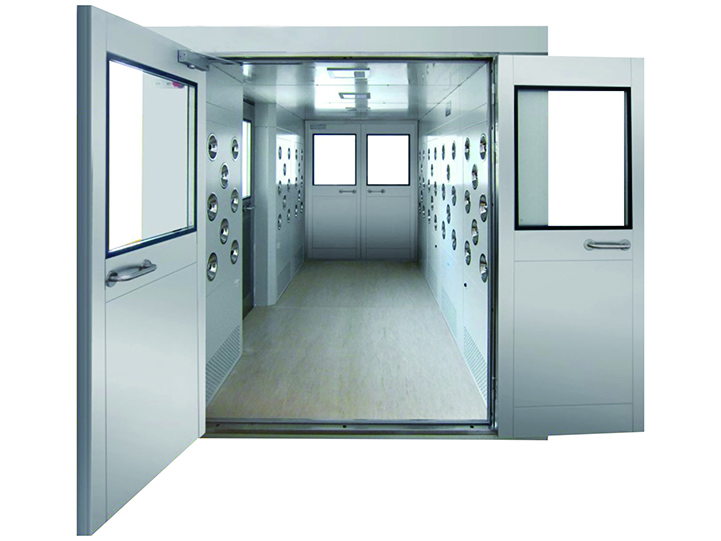
Planning a clean room project can feel overwhelming. From design to installation, many factors affect the clean room cost, and making sense of them can save both time and money. Whether you’re considering a traditional facility or a modular solution, understanding the key cost drivers is crucial to making informed decisions. What Factors Influence Clean Room Cost? Cleanliness Class (ISO Level) The first major factor in determining clean room cost is the required cleanliness level. Higher ISO classes (such as ISO 1–5) demand more precise air filtration, stricter materials, and advanced environmental controls, all of which increase the investment. Conversely, lower-grade clean rooms, like ISO 7–9, are easier and cheaper to build, suitable for basic manufacturing or storage. Space Size and Complexity The larger and more complex the space, the higher the cost. Multi-zone layouts, specialized areas, or multi-floor designs require more construction time, advanced HVAC systems, and additional equipment. Even within the same ISO class, a 500 m² room will cost significantly more than a 100 m² room. Construction Type: Modular vs Traditional Modular Clean Room: These prefabricated systems offer flexibility and faster deployment. While initial costs may be higher, modular solutions are ideal for projects that may expand or relocate in the future. Traditional Construction: Custom-built clean rooms can meet highly specific requirements and larger scale projects, but they require longer construction times and higher budgets. Material Selection Material choices also impact the clean room cost. Examples include: Walls: Soft partitions (lower cost) vs rigid panels (higher cost for high cleanliness) Flooring: Epoxy, PVC, stainless steel — each with different costs and maintenance requirements Ceiling & Lighting: Must be dust-resistant, easy to clean, and well-sealed for airflow integrity Equipment and Specialized Features Essential clean room equipment contributes significantly to the budget: HVAC systems with HEPA or ULPA filtration Pass-through chambers, air showers, and airlocks Clean benches, laminar flow units, and specialized furniture Compliance and Certification Meeting industry standards like ISO 14644, GMP, or FDA requirements often involves extra documentation, validation, and inspection costs. Failing to plan for this can lead to unexpected expenses later. How Much Does a Clean Room Typically Cost? While actual pricing varies by project specifics, here’s a rough guide to clean room cost per square foot: ISO Class Estimated Cost (USD/sq. ft) Typical Applications ISO 7–9 (Basic) $100–$300 Storage, basic production ISO 5–6 (Intermediate) $300–$600 Pharmaceutical, biotech labs ISO 1–4 (High) $600–$1,000+ Semiconductor, electronics, sterile formulations For companies exploring clean room installation, knowing these estimates helps in budgeting and planning. If you are considering buying a prebuilt solution, searching for clean room for sale or comparing ...
Читать далее