основанная компания

служащий компании

годовой оборот компании (м)

страна сотрудничества


2026
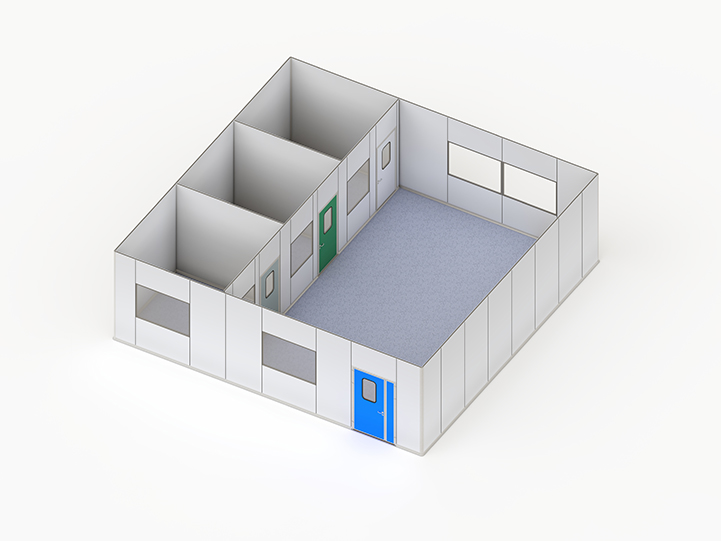
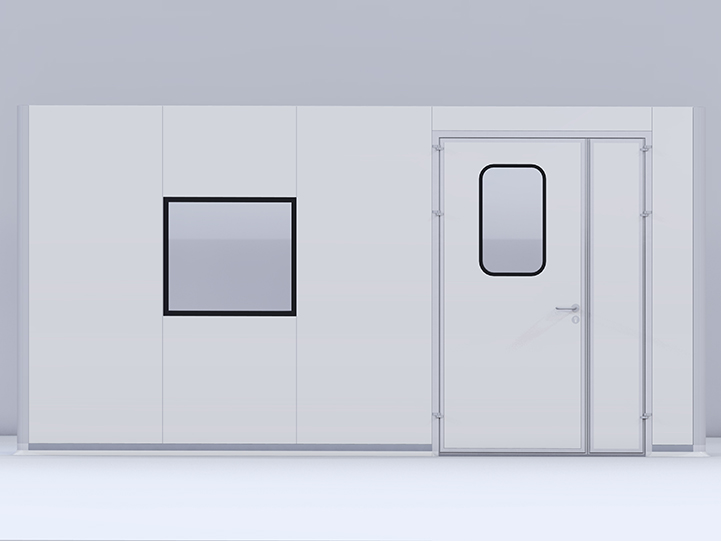
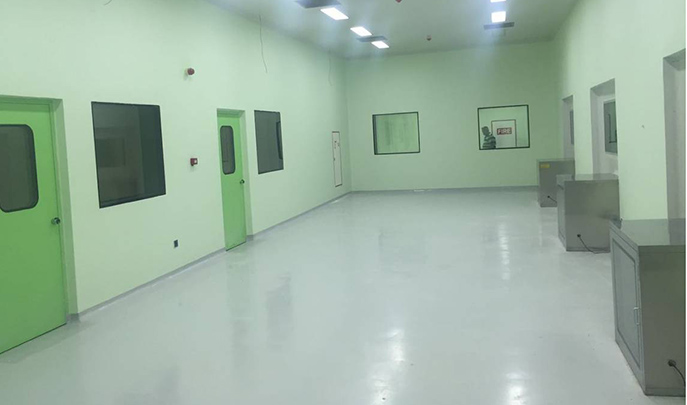
Home› Project Cases› Chinese Academy of Sciences Research Campus, Shanghai Project Case Study · Scientific Research Chinese Academy of Sciences Research Campus, Shanghai: A Modular Cleanroom & Laboratory Build How Wonclean delivered two complementary builds for one Shanghai research campus — a multi-floor indoor cleanroom and animal-barrier fit-out, and a plug-and-play, ark-style outdoor modular laboratory dropped into a wooded site with no building foundation. modular cleanroom clean room laboratory modular laboratory Shanghai Zhangjiang, Pudong — China 2 buildings South Buildings 1 & 2, multi-floor fit-out Indoor + outdoor Cleanroom fit-out plus a mobile modular lab 2024 Materials and modular unit by Wonclean By the Wonclean project team Published June 2026 ~9 min read When a leading Chinese Academy of Sciences research campus in Shanghai needed to expand its laboratory capacity, it faced two very different problems at once: how to upgrade demanding research and animal-barrier space inside an operating building, and how to add a fully functional laboratory outdoors, on a wooded plot with no building to put it in. Wonclean supplied both — the cleanroom envelope for the indoor floors, and a self-contained, ark-style modular laboratory for the outdoor site. This case study walks through the brief, the constraints, and the engineering decisions behind each part of the project, and why a modular approach fit a working scientific campus so well. A laboratory placed, not poured. The ark-style modular laboratory after installation — a complete clean envelope set down among the campus’s mature trees, with no permanent building required. Project snapshot At a glance Client A Chinese Academy of Sciences research institute, Shanghai (incl. the USTC Shanghai Research Institute on the same campus) Location Zhangjiang, Pudong New Area, Shanghai, China Sector Scientific research & life sciences, including a laboratory-animal (barrier) facility Scope Indoor cleanroom & barrier fit-out across South Buildings 1 & 2 (multiple floors) plus one outdoor ark-style modular laboratory Wonclean supply Cleanroom wall panels, cleanroom doors, cleanroom fire doors, fire windows, and a complete modular laboratory unit Approach Prefabricated, modular construction for minimal on-site disruption and fast deployment 01 — The brief One campus, two very different needs Research campuses rarely grow in tidy, planned steps. This one needed to solve two requirements in parallel. Inside its South Buildings, several floors had to be converted into controlled research environments — including an upper-floor laboratory-animal facility, which carries some of the strictest contamination-control and finish requirements of any laboratory type. At the same time, the campus needed additional, independent laboratory space quickly, and the only available ground was a tree-shaded plot with no structure on it. A conventional answer — pour a new building for the outdoor space, a...
2026
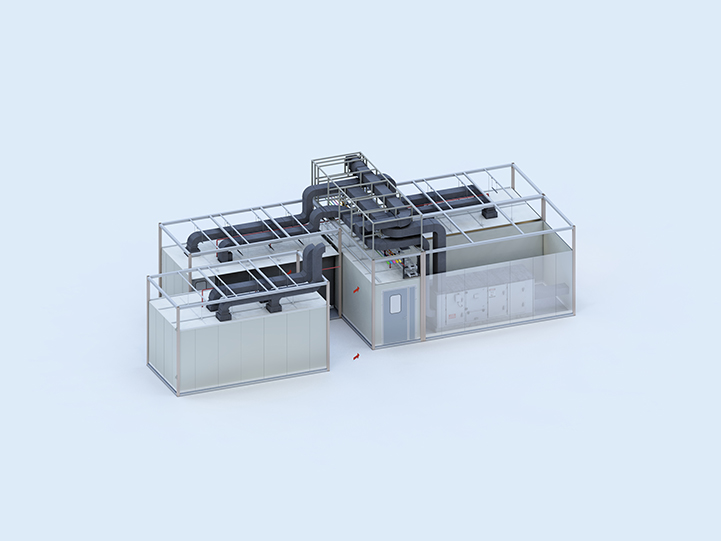
Home› Technical› Cleanroom Standards Across Southeast Asia: Mobile & Containerized Labs Technical Analysis · Regional Deployment Cleanroom Standards Across Southeast Asia: Deploying Mobile and Containerized Laboratories ASEAN runs on one particle standard but many national regulators — in a climate that fights you the whole way. This is a technical look at how mobile and containerized cleanroom labs meet those rules, and survive the tropics. Topics mobile cleanroom containerized laboratory modular laboratory ISO 14644-1 The particle-count baseline used across every ASEAN market PIC/S GMP scheme that most ASEAN drug regulators now follow >80% RH Wet-season humidity a tropical lab’s HVAC must overcome Weeks Typical site time for a factory-built containerized lab By the Wonclean technical team Updated June 2026 ~8 min read A cleanroom in Penang, Ho Chi Minh City or Jakarta faces a problem its counterpart in a temperate country never does: it must hit the same internationally recognised cleanliness numbers while sitting in 32 °C heat and humidity that can pass 80% for months at a time — and it usually has to be up and qualified far faster than a conventional build allows. For many companies expanding across Southeast Asia, the answer is to stop building cleanrooms on site and start delivering them: mobile and containerized laboratories that are manufactured, fitted out and pre-tested in a factory, then shipped and connected. This article covers the regulatory baseline these labs must meet across ASEAN, the climate they have to defeat, and how a containerized design is actually put together to do both. A laboratory you deliver, not pour. A Wonclean containerized cleanroom complex: standard transport modules joined on site into a single sealed lab, with the HVAC and filtration built in before it ships. 01 — The standards baseline One particle standard, many national regulators The good news for anyone deploying across the region is that the core technical yardstick is universal. Cleanliness is classified everywhere by ISO 14644-1, which sets the maximum airborne-particle counts per cubic metre for each ISO class. A lab specified to ISO Class 7 in Malaysia is, technically, the same target as ISO Class 7 in Vietnam. That shared baseline is what makes a standardised, factory-built lab viable in the first place. The complication is regulatory, not technical. For pharmaceutical and medical work each country enforces its own Good Manufacturing Practice (GMP) regime through its own authority — and most, but not all, have aligned those regimes to the PIC/S GMP guide, which in turn tracks EU GMP including the demanding Annex 1 for sterile products. The practical effect is that the cleanroom hardware can be common, while documentation, qualification and inspection expectations vary by market. Primary medicines regulators in major ASEAN markets. Always confirm current requirements directly with the relevant authority before a project. Market Regulator...
Читать далее2026
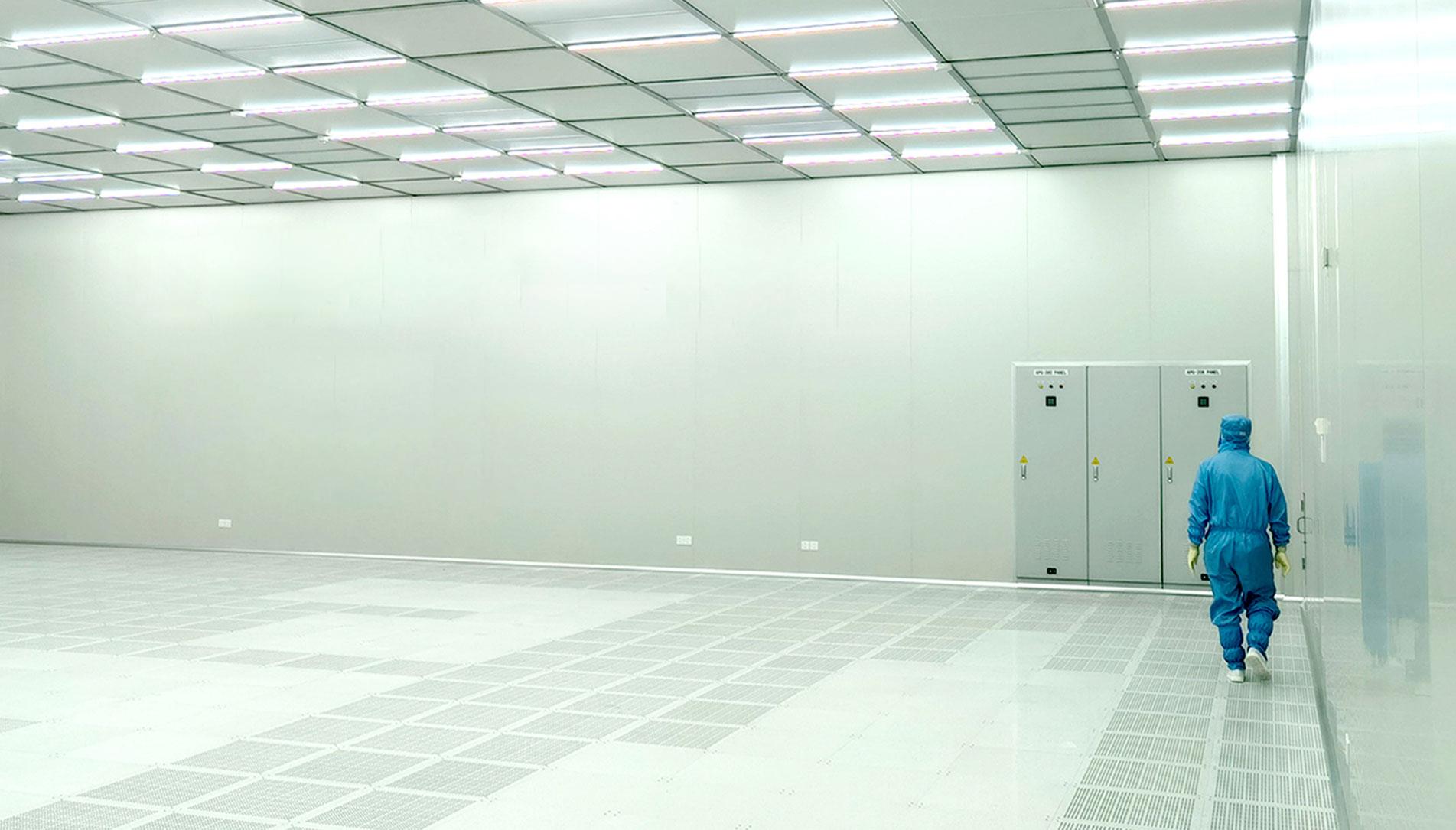
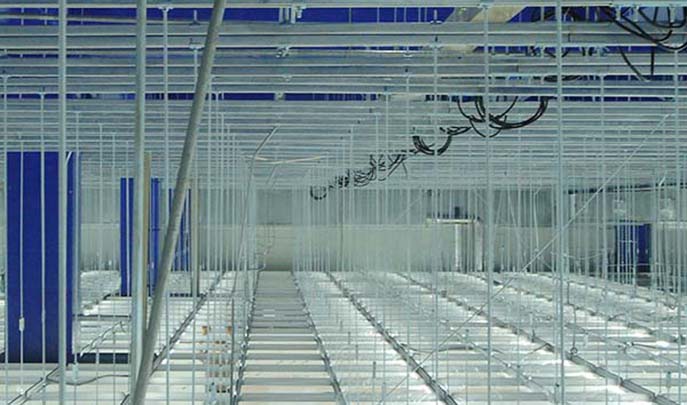
Home› Technical› Unidirectional Airflow Ceilings for ISO Class 5 Semiconductor Cleanrooms Technical Analysis · Semiconductor Cleanrooms Designing Unidirectional Airflow Ceilings for ISO Class 5 Semiconductor Cleanrooms In a wafer fab the ceiling is not a finish — it is the air supply. This is a technical look at how the ceiling plane delivers the vertical unidirectional flow that an ISO Class 5 process demands, and what that means for grid, filters and floor. Topics modular cleanroom cleanroom ceiling T-bar ceiling 0.30–0.50 m/s Typical downward face velocity for unidirectional ISO 5 flow ≤3,520 / m³ Max particles ≥0.5 µm allowed in ISO Class 5 ULPA U15 Filter grade often specified for critical lithography zones ≥80% Ceiling filter coverage typical of full unidirectional flow By the Wonclean technical team Updated June 2026 ~8 min read In most buildings the ceiling closes a room off. In a semiconductor cleanroom it does the opposite: it is the surface through which clean, conditioned air enters, and it sets the airflow pattern that keeps sub-micron particles away from the wafer. Get the ceiling wrong and no amount of gowning, filtration capacity or floor cleaning will recover an ISO Class 5 environment. This article looks at the ceiling as an engineered air-delivery system for advanced electronics manufacturing: why unidirectional (laminar) flow is non-negotiable at ISO 5, how the filter-and-grid plane is built to deliver it, how the return path through a raised floor closes the loop, and the contamination and static issues that are specific to the ceiling itself. Vertical unidirectional flow in practice. A high-classification cleanroom built by Wonclean: a full filter ceiling supplies air that travels straight down and exits through a perforated raised floor, sweeping particles away from the work plane. 01 — The core requirement Why ISO Class 5 forces a unidirectional ceiling Cleanliness classes from ISO 14644-1 cap the number of airborne particles allowed per cubic metre. At ISO Class 5 the limit is 3,520 particles ≥0.5 µm per cubic metre — roughly a thousand times cleaner than a well-run office. A single fingerprint-sized burst of contamination near a lithography or etch step can scrap a wafer, so the air at the work plane has to be continuously replaced before particles can settle. Turbulent, mixed-flow ventilation — the scheme used in lower-grade rooms and in most of a typical modular cleanroom — dilutes contamination but cannot guarantee it is swept away from a specific point. ISO Class 5 and cleaner processes therefore rely on vertical unidirectional flow: a uniform sheet of filtered air moving top-to-bottom across the whole room at a steady velocity, typically 0.30–0.50 m/s. To produce that sheet, the ceiling cannot be a few scattered diffusers; it has to become an almost continuous filter plane. This is the first design consequence that separates a fab cleanroom from a general one: the ceiling, the filtration and the floor retu...
Читать далее2026
Environmental Control Challenges in GMP Biopharmaceutical Manufacturing /* Scoped + !important so this article keeps its own typography no matter what CSS the host page applies. */ .wc-doc{ --paper:#ffffff; --ink:#13201a; --body:#33433b; --muted:#5f7167; --faint:#8497a0; --line:#e1eae4; --tint:#eef6f1; --tint2:#f7faf8; --green:#137a43; --green-dk:#0c5530; --green-li:#2fa86a; --green-ink:#0b3d24; --shadow:0 1px 2px rgba(16,40,28,.06),0 10px 30px rgba(16,40,28,.06); --radius:14px; --maxw:880px; --wide:1080px; --sans:"Segoe UI",system-ui,-apple-system,"Helvetica Neue",Arial,"PingFang SC","Microsoft YaHei",sans-serif; --mono:ui-monospace,"SF Mono",Menlo,Consolas,monospace;} .wc-doc *{box-sizing:border-box;} .wc-doc{-webkit-text-size-adjust:100%;scroll-behavior:smooth;} .wc-doc{margin:0 !important;font-family:var(--sans) !important;color:var(--body) !important;background:var(--paper); font-size:17px !important;line-height:1.74 !important;-webkit-font-smoothing:antialiased;text-rendering:optimizeLegibility;} .wc-doc img{max-width:100%;height:auto;display:block;} .wc-doc a{color:var(--green-dk) !important;text-decoration:none !important;} .wc-doc a:hover{text-decoration:underline !important;} .wc-doc .wrap{max-width:var(--maxw);margin:0 auto !important;padding:0 22px;} .wc-doc .wide{max-width:var(--wide);margin:0 auto !important;padding:0 22px;} .wc-doc .site-head{position:sticky;top:0;z-index:50;background:rgba(255,255,255,.92); backdrop-filter:saturate(140%) blur(8px);border-bottom:1px solid var(--line);} .wc-doc .site-head .wide{display:flex;align-items:center;justify-content:space-between;height:62px;} .wc-doc .brand{display:flex;align-items:center;gap:11px;font-weight:800 !important;letter-spacing:.02em !important;color:var(--green-ink) !important;} .wc-doc .brand .mark{height:34px;width:auto;flex:0 0 auto;} .wc-doc .brand small{display:block;font-weight:600 !important;font-size:11px !important;letter-spacing:.16em !important;text-transform:uppercase !important;color:var(--muted) !important;} .wc-doc .brand .wm{display:flex;flex-direction:column;line-height:1.05 !important;} .wc-doc .nav-cta{font-size:14px !important;font-weight:700 !important;background:var(--green);color:#fff !important;padding:9px 16px;border-radius:999px;letter-spacing:.01em !important;} .wc-doc .nav-cta:hover{background:var(--green-dk);text-decoration:none !important;} @media(max-width:560px){.wc-doc .brand small{display:none;}} .wc-doc .hero{background: radial-gradient(1200px 380px at 82% -8%,rgba(47,168,106,.16),transparent 60%), linear-gradient(180deg,var(--tint2),var(--paper)); border-bottom:1px solid var(--line);} .wc-doc .hero .wrap{padding-top:28px;padding-bottom:26px;} .wc-doc .crumbs{font-size:13px !important;color:var(--faint) !important;margin:0 0 16px !important;} .wc-doc .crumbs a{color:var(--green-dk) !important;} .wc-doc .crumbs .sep{margin:0 7px !important;color:var(--faint) !important;} .wc-doc .eyebrow{font:700 12.5px/1 var(--mono) !important;letter-spacing:....
Читать далее