/
How to Choose Semiconductor CleanroomWall Panels: Sandwich Panels, RockwoolCore and Particle Control
How to Choose Semiconductor CleanroomWall Panels: Sandwich Panels, RockwoolCore and Particle Control
Jul 27,2026
Technical Analysis | Semiconductor Wall Panels
How to Choose Semiconductor Cleanroom Wall Panels: Sandwich Panels, Rockwool Core and Particle Control
Chemical-resistant cleanroom wall panels must be selected as a complete system: surface material, sandwich panel core, edge detail, joint sealing, door/window interfaces and cleaning compatibility. For semiconductor fabs, the wrong panel choice can create particle traps, corrosion risk and qualification problems long after installation looks complete.
SurfaceMatch coatings or HPL to cleaning chemistry.
CoreChoose rockwool, honeycomb or other cores by risk.
JointsControl ledges, gaps and sealant compatibility.
QualificationDocument materials and cleanability assumptions.
For semiconductor cleanrooms, wall panels are not decorative construction products. They shape airflow boundaries, pressure leakage, chemical cleaning durability, electrostatic risk, maintenance access and particle behavior. A good selection process starts with process risk and cleaning agents, then works back to the panel material and joint detail.
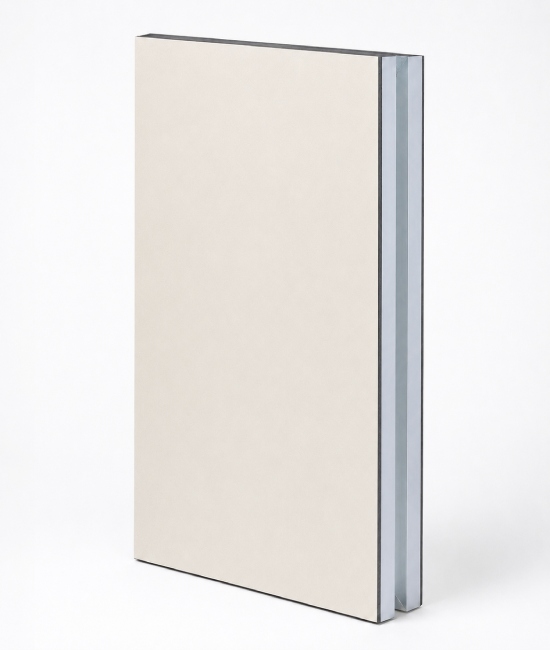
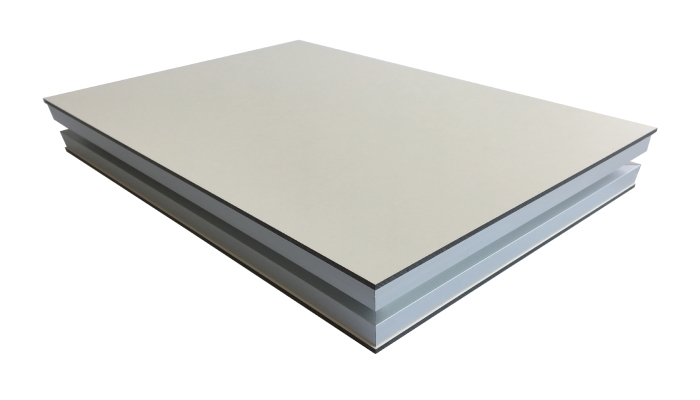
Chemical-resistant surface layer. Chemical durability is mainly a surface and sealing question, not only a core-material question.
Selection Logic
Start with Cleaning Chemistry and Process Exposure
A wall panel described as chemical-resistant is only meaningful when the expected chemicals, concentration, contact time, temperature and cleaning frequency are defined. Semiconductor support areas may see IPA, diluted acids or alkalis, peroxide-based agents, ammonium-based cleaners or process-specific residues. A panel surface that survives occasional wiping may fail under repeated exposure.
For this reason, material compatibility should be reviewed against the project cleaning procedure, not only a generic brochure statement. ASTM D543 is commonly used as a reference framework for evaluating plastics exposed to chemical reagents, while ASTM D1308 is often referenced for effects of household chemicals on clear and pigmented coatings. Project teams should still confirm the correct test method with the material supplier and owner.
Wonclean cleanroom wall systems can be configured with different panel surfaces, cores and profiles, but the specification should always state the cleaning agents and acceptance criteria.
Core Selection
Rockwool Core Supports Fire, Rigidity and Panel Stability
The core of a sandwich panel is protected by the surface skins and edge design. Rockwool is often selected when fire behavior, acoustic performance, rigidity and dimensional stability are important. It is not the surface that contacts cleaning chemicals; the coating or HPL face and the sealed joint detail do that job.
For semiconductor use, the core decision should be tied to room height, panel span, door/window openings, fire strategy, maintenance impact, wall-mounted equipment and pressure leakage tolerance. If the panel flexes or the joint opens, particle control can be compromised even if the core itself is appropriate.
Wall panel decisions that affect semiconductor cleanroom performance.
Design item
Why it matters
Practical check
Surface chemistry
Controls resistance to cleaning agents and process residues.
Check cleaning procedure, concentration and contact time.
Core material
Affects fire strategy, stiffness, span and installed stability.
Review rockwool, honeycomb or alternative cores by room risk.
Joint profile
Gaps and ledges collect particles and cleaning residue.
Specify flush, sealed and cleanable transitions.
Openings
Doors, windows and pass-throughs can become leakage paths.
Coordinate frames, sealants and pressure cascade details.
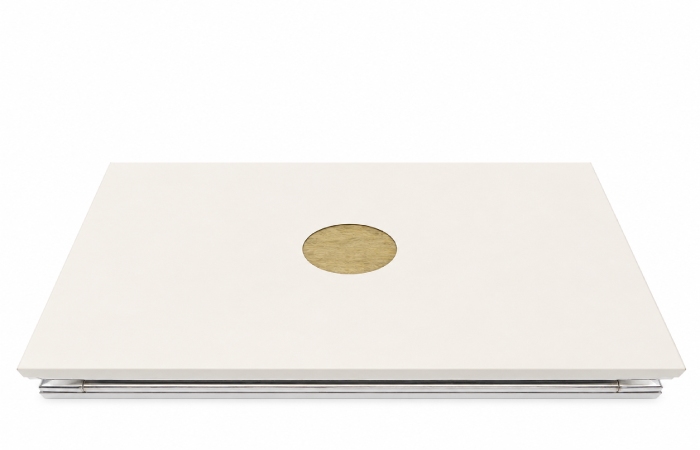
Rockwool core visibility. The core supports panel performance, while skins, edges and sealants protect the cleanroom surface.
Particle Control
Particle Control Happens at Joints, Corners and Interfaces
ISO 14644-1 classifies cleanrooms by airborne particle concentration, but wall panel design influences how easy it is to keep those targets stable. Scratched surfaces, exposed edges, rough sealant, ledges and loose trims can become particle sources or cleaning traps.
The cleanroom wall should be detailed for wipe-downs and visual inspection. Flush joints, compatible sealants, coved corners where required, smooth frame transitions and properly supported openings are more important than choosing a panel by core material alone.
Where AMC sensitivity is high, the panel specification should also consider material outgassing risk and cleaning residue control. This is especially relevant near lithography support, chemical handling or metrology spaces.
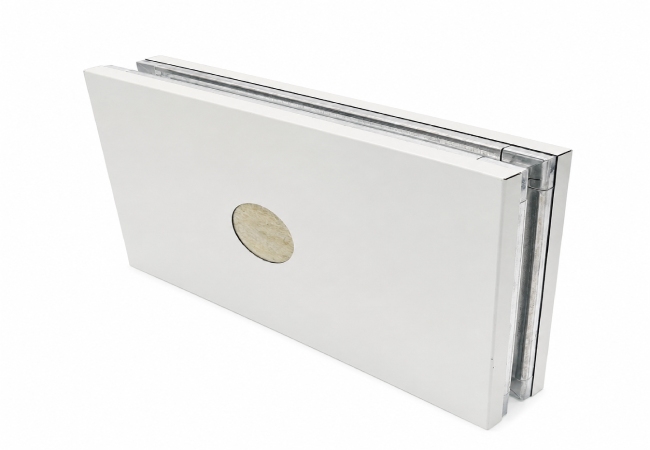
Edge and joint detail. Joint geometry, skin protection and sealant compatibility directly affect cleanability and particle control.
Qualification Readiness
Panel Selection Should Support Cleanroom Qualification
ISO 14644-4 addresses the process of cleanroom design, construction and start-up. For wall panels, that means the material record, layout, joint details, penetrations and installation checks should be traceable before commissioning begins.
ISO 14644-3 supports cleanroom test methods used during verification. Wall panels are not the only factor in test results, but leakage paths, rough transitions and hard-to-clean surfaces can make classification and recovery harder to maintain.
For Wonclean projects, the wall panel package should be reviewed with doors, windows, pass boxes, ceiling interfaces and pressure cascade drawings, because these interfaces are where many installation defects appear.
Surface and edge quality. HPL or coated surfaces must be paired with protected edges and cleanable construction details.
Technical Fact Check
Source-Backed Facts Used in This Article
Fact used
Source
Design implication
Cleanroom classification is based on airborne particle concentration.
Cleaning agents, concentration and exposure time should be specified for panel selection.
Referenced Standards
Referenced Standards and Public Access Notes
ISO 14644-1: official ISO page for cleanroom air cleanliness classification by particle concentration.
ISO 14644-4: official ISO page for cleanroom design, construction and start-up.
ISO 14644-3: official ISO page for cleanroom test methods.
ASTM D543: official ASTM page for evaluating plastics under chemical reagent exposure.
ASTM D1308: official ASTM page for coating resistance to household chemicals. Full standard text may require purchase or authorized access.
FAQ
Cleanroom Wall Panel FAQ
Are rockwool cleanroom panels chemical-resistant?
Chemical resistance mainly depends on the exposed surface, coating or HPL face, plus the sealants and joint details. The rockwool core supports panel structure and fire-related design objectives but should not be treated as the chemical contact layer.
What wall panel surface is best for semiconductor cleanrooms?
The best surface depends on cleaning chemistry, abrasion risk, AMC sensitivity, ESD strategy and visual inspection needs. HPL, coated steel and stainless options can all be appropriate in different zones.
Why do wall panel joints matter so much?
Joints, trims and penetrations are common locations for gaps, ledges and sealant defects. These can collect particles, hold residues or create pressure leakage paths.
What documents should be prepared for wall panel qualification?
Prepare panel material records, core and surface specifications, layout drawings, joint details, sealant data, cleaning compatibility review, installation inspection records and interface drawings for doors, windows and ceilings.
Wonclean Engineering Note
Specify the Panel as Part of the Cleanroom Envelope
A semiconductor cleanroom wall panel should be selected with the ceiling, doors, windows, pass-throughs, pressure cascade and cleaning procedure. Treating the wall panel as a stand-alone construction product often leads to gaps between cleanability, particle control and installation reality.




 онлайн -сервис

